Time passes quickly. Before you know it, it's already time for a major reunion.
Thursday, October 12th 2006, was the official start of my five year college reunion. There were few events scheduled for the day, yet since I had selected the registration option that allowed me to get into everything, I decided to drop by campus and go to the ones that sounded interesting. Thus after eating lunch at work, I found myself driving to campus. (Ah, it's so easy when one still lives locally.)
I registered, then flipped through the class book (a book about what each student has been doing since graduation; I hadn't yet received mine in the mail). I also flipped through the class of 56's book, just to see the contrast between where they are in life and where we are.
Although I'd hoped to be on campus in time for the first batch of "classes without quizzes" (i.e., neat lectures by faculty), I had no such luck. Rather than go into a small class quite late, I headed to MemChu for the organ demonstration "class." The class, upstairs by the organ, was full so I settled myself in the chapel itself, planned which events I'd attend over the weekend, and listened to the organ. Pieces of the lecture floated down to me ("the largest pipe organ west of the Mississippi," etc.). Memorial Church is a beautiful place, on par with many of the elaborate churches I saw in Montreal (described in another post), although once again I had to snicker about its "non-denominational" designation. Non-denominational my ass: there were images of christ plastered everywhere.
After class, I headed to my next class: "Gurus, Hired Guns, and Warm Bodies." The speaker, Professor Barley, had given this talk in the east bay a year ago. I had wanted to go to it then but couldn't make it. I'm glad I got a second chance: he's an entertaining speaker. The talk described, with many neat anecdotes, his anthropological research on how consultants live, why some choose that life, and why more have been choosing it in recent years. Like the pipe organ class, most of the other students were much older than me. In this case, this turned the class into a discussion; many of them had jobs as consultants for a time and had thoughtful insights into the subject.
My afternoon classes completed, I headed back to work to get stuff done. In the late evening, I returned to campus to attend the "Death Tour." It was a small group, tilted slightly younger, and led by professor Rick, a man that seemed familiar and I finally placed by realizing that while shopping for classes I sat in Anthro 1 for a week when he was teaching it. Rick is a great storyteller. The best aspect of the tour was not walking by the big red barn, the angel of death, or the mausoleum, but rather the tales Rick wove about the history of Stanford and the land on which it's housed. While some of the talk was the standard death-of-Leland-Jr and the mysterious-death-of-Jane-Stanford, some was stuff I never heard before about the characters (yes, they were characters) who owned the land before Leland-Sr and how Leland-Sr acquired the land at a rate well below market value. The talk also included great stories about the original mausoleum, the original family house, and some other buildings that don't exist anymore.
During the tour, I ran into my first class of 2001 person of the weekend. Surprisingly, it was someone I actually knew: a roommate of a good friend of mine. He'd flown in from Boston and we spent some of the tour catching up. I guess this means the weekend already truly qualifies as a reunion.
Stanford Five Year Reunion: Thursday: Check-In, Consultants, and Death Tour

Northern California Renaissance Faire 2006
I went to Renaissance Faires several times in junior high and high school but haven't been since then. I'd always wanted to go back. I've known about the Northern California Renaissance Faire for a couple years but hadn't yet made it until on Sunday, October 8th, 2006, I finally did, returning with a friend of mine.
The faire was fun and almost as I remembered it. Many people wore costumes from some era (Middle Ages, Dark Ages, Renaissance, Victorian, etc.). It was difficult to tell who was a paid actor and who was simply an enthusiastic participant. Acting the part, accents and expressions and all, takes practice; the few attempts I had at brief conversations with people playing it up really failed as I my skills weren't up to par.
Most costumes, foods, and shows were European, especially English, Irish, and Scottish, though pretty much anything within a couple thousand miles of the Mediterranean seemed to be fair game. My friend called the atmosphere surreal. The booths were traditional for a renaissance faire: many clothing (including costumes, cloaks, and hats) and knife stores, and an assortment of booths selling pewter figurines, jewelry, puzzle boxes, leather, ceramics, artwork (mostly fantasy), wooden mugs, etc. One booth had quite pretty and very heavy stone drink coasters.
Although these pictures and videos do a fair job of showing my experience at the faire, they're missing some events and observations described below.
Shows:
We went out of our way to attend Marlowe's Shadowe, a hilarious troupe that presents condensed comedic interpretations of Shakespearian plays, frequently in verse.
With good fortune, we arrived to the show early and got to catch the end of the previous show, a musician named Kenny Klein. The one song we heard "What Do You Do With An Old Dead Gerbil?" cracked me up. Here's part of the chorus:
Hey hey rigor mortis,He sang it in many different styles including reggae, country, and bob dylan, each accurately portrayed. With the constant switching of musical genres, the lyrics never get old.
Hey hey rigor mortis,
Hey hey rigor mortis,
Early in the morning.
We also watched the Albion Schoole of Defense, a fairly decent show full of staged swordplay and historical information about the evolution of fencing. Do you know the difference between the English and Spanish style and the swords they used? And yes, they actually do teach swordplay, though the show was produced by their theatrical unit.
Some Scottish and Irish dancing done by Siamsa le Cheile was neat to watch and guess who was related to whom. (It seemed like it probably was a family dance troupe.) It turns out we were wrong; judging by the biographies, it's not a family troupe.
The final show we saw was a demonstration by an experienced glassblower. He's been blowing glass for multiple decades and it was obvious this was his life's passion. I had forgotten blowing glass actually meant literally blowing air into glass. Both watching glass expand as one blows and watching the molten glass simply change shape under gravity were cool. He made a large glass bowl (unexpectedly, as one couldn't tell what it would be until it was nearly done) and made and demonstrated the properties of a Rupert's Drop, a cool phenomenon with which I was already familiar. (Go read about it if you don't know what it is.)
Food:
I had what my memory of renaissance faire food is: a turkey leg. I ordered a small turkey leg which turned out to be huge -turkeys have big legs!- and dry -blah-. My friend has fish and chips and I tried the chips (fries) and they were definitely good. Other than that, the faire had a wide assortment of food from the expected regions, much of it offered on a stick/skewer/bone/whatever, including frozen chocolate covered bananas and the amusingly named sin on a stick (chocolate-covered cheesecake).
For dessert, we had a orange frozen ice, actually served in half an orange peel. It was so frozen it took half an hour to soften in the sun before it was easily spooned.
Other Remarks:
My t-shirt which says "wear art not advertising" in a fancy celtic script got three compliments, including one girl who said she wears her art on her and showed me a tattoo on her shoulder, and one guy that hassled me in friendly way, claiming that my shirt was an advertisement for art itself, but still gave me one of those chocolate coins with a gold wrapper.
The boundaries of the faire were demarcated by drapes (as seen in this photo). It's neat, because as one sees employees enter and exit, it's easy to imagine there are countless secret passageways leading who knows where.
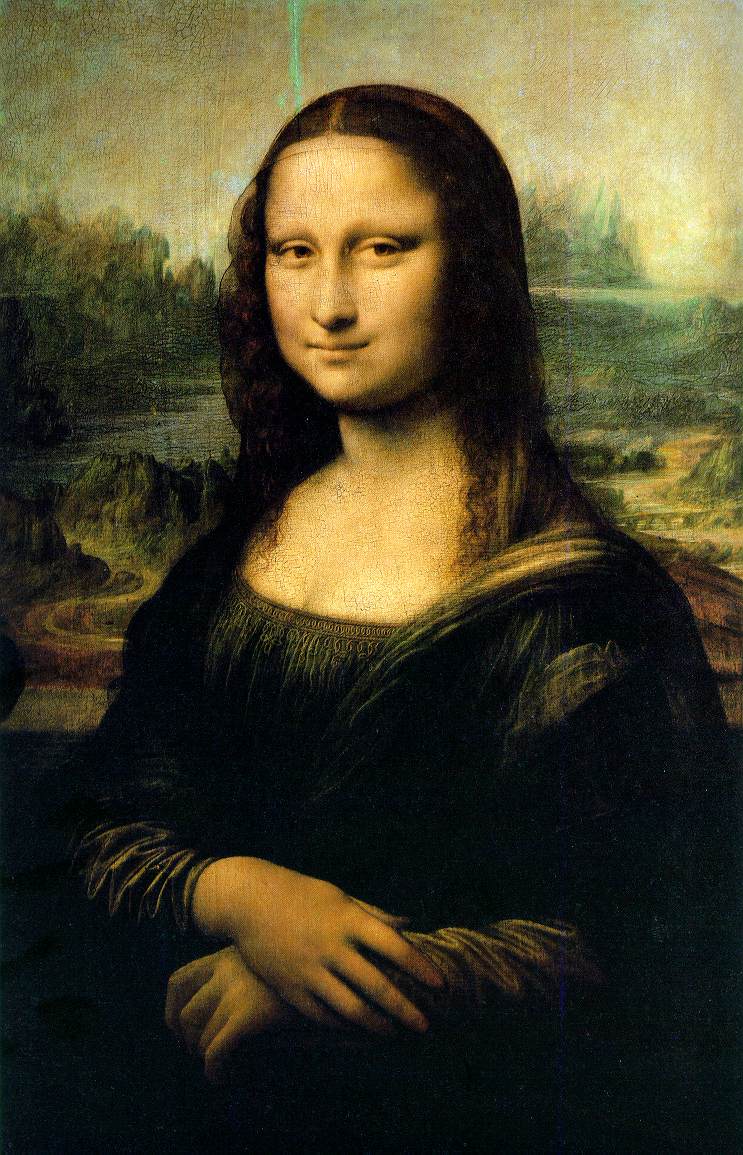
We observed many costumed women in dresses with low bustlines and wondered if these were culturally appropriate during the renaissance or any similar age. After failing to find the answer on the web, I asked my knowledgeable ex-roommate. She said that yes indeed in some periods dresses with such low cuts were culturally acceptable and provided some examples: a low-cut a dress from the 1740s, a very low-cut dress from the 1630s (painted by Reuben) (zoom in to see what I mean), and even Mona Lisa's dress.
Getting to the faire was neat as well. We got to see the sprawling full service series of businesses that is Casa de Fruta. We witnessed countless quite artistic rusting discarded old farming equipment on the side of the road. And we got a odiferous drive through Gilroy.
Hayward Greek Festival 2006
On Saturday, October 7th 2006, I spent late afternoon and evening at the Hayward Greek Festival, a festival I attended last year. Participating was comfortable as everything looked identical to the previous festival: same foods, same layout, same booths selling books, jewelry, and clothes, the same dance floor and largely the same dances, and even a similar booklet (though with more typos this year) with advertisements for Greek-owned businesses, cooking recipes and advice, and Greek words and phrases. One neat new item for sale was a homemade cookbook with the recipes for every dish they cook at the festival. (I decided not to buy it.) The only other cookbook for sale was right next to it, labeled Hellenic cooking. I can't figure out what the difference between Greek and Hellenic is...
Since it's primarily a food festival, exploring the booths was pretty fast (as there were few and I'd generally seen them before), so I spent my couple hours there reading, waiting in line for food, eating, watching dancing, reading, getting more food, watching a slide show on modern Athens, reading, drinking, listening to a lecture about the design of an eastern orthodox church, eating more, and so on (in some order). The slide show was better than what one expects when watching one man's vacation slides. And the talk about the architecture, decor, and iconography of an eastern orthodox church was fairly neat too. Did you know that every church altar when consecrated gets sealed inside it a fragment of bone or cloth or something similar from a saint? If the church moves, the altar must go with it because it's not allowed to be destroyed.
As is traditional for festivals, I stuffed myself:
* a greek salad. exactly right.
* metaxa (a kind of brandy). I had it on the rocks and thought it was a solid brandy, liking it as much as I like many brandies (which actually isn't much).
* spanakopita (Greek spinach pie). decent, though a little greasy.
* mixed veggies (zucchini, squash, eggplant, mushrooms, potatoes, carrots, tomato paste). nothing too exciting: veggies in a light, slightly sweet tomato sauce. I could probably make this pretty easily.
* gyro - great, as usual. Lamb, onions, tomato, tzatziki, and that wonderfully tasty, thick, and chewy pita bread that I don't get anywhere besides these festivals.
* karidopita (honey walnut cake). a sweet, moist, and quite tasty dessert. I liked it enough that I found a recipe on the web and made it a few days later with fairly similar success.
* melomarorona (honey cookies) - good. similar to the karidopita but with more of a orange zest undertone and practically no walnut flavor.
* koulourakia (like a butter cookie in softness and taste though in the shape of a bread twist) - decent.
Interesting Articles: September 18th-October 16th 2006
Health:
* High-protein diets boost hunger-taming hormone (Science News). In short, a causal study links increasing a percentage of ones calories coming from protein to higher levels of a hormone related to feelings of satiety. The source article, Critical role for peptide YY in protein-mediated satiation and body-weight regulation (Cell Metabolism), is online.
* Radiant plasma may combat cavities (Science News). Amazing: not only the ability to create a plasma in a hand-held tool at room temperature, but using such a tool to clean teeth. For details on the technology, see some of the listed references.
Reproduction:
* Sperm in frozen animals still viable years later (Science News). A la Jurassic park. The source article, Spermatozoa and spermatids retrieved from frozen reproductive organs or frozen whole bodies of male mice can produce normal offspring (Proceedings of the National Academy of Sciences), is available online.
* Problem Paternity: Older men seem more apt to have autistic kids (Science News). Another article (see the last interesting articles post), again non-causal, relating some feature about men to the health of the babies they father. The title basically says it all but if you want more, the abstract of the source article, Advancing paternal age and autism (Archives of General Psychiatry), is online.
Culture:
* Faker... and Harder (WNYC's On The Media via NPR). (Scroll down for the story.) Reports on a study (that could have been better designed) finding The Daily Show has the same quantity of hard news as network news broadcasts. The press release, It's no joke: IU study finds The Daily Show with Jon Stewart to be as substantive as network news (Indiana University Press Release), is online; I haven't yet located the scientific paper on the topic. (Maybe it's still unpublished?)
Armenian Food Festival 2006
After the play, I headed south to the Armenian food festival. Last year, I had a good experience at an Armenian festival in Oakland. Although the festival was supposed to close at 8:00pm, when I arrived at 6:00pm it was already mostly shut down. I wandered among the few booths still open and grabbed one of the two types of hot dishes remaining: an Armenian sausage (soujook) sandwich. When I ordered they grabbed one of these aluminum-wrapped sandwiches out of a steamer and handed it to me. It consisted of slices of sausage, red pepper, pickle, and possibly mustard on a hoagie roll; the sausage itself was chewy, quite red, spicy, and definitely screamed "this is meat." It satisfied.
While I ate I watched some Armenian folk/line dancing. About a dozen women clasped hands and danced in a semi-circle, kicking and stepping in synch. They were clearly having fun and it made everyone at the festival watch. A handful of men formed their own square and dance in a different style with arms outstretched at shoulder height and with much more foot movement. When the music increased right before the festival really ended, more women joined the women's line. It really was a festival.
And one can tell the festival was authentic since all the announcements were made in Armenian. Some, though not all, were repeated in English.
Before I left, I grabbed two cheese filled pastries, one that looked like a turnover and one that looked like baklava except with cheese instead of nuts. (I didn't realize they were both cheese when I bought them.) Reheating them later that evening in the oven along with some vegetables, they completed my dinner. Incidentally, as I bought them, the woman in the pastry section were trying to figure out why they were closing early. Some hypothesized it might be because, aside for them, the festival was effectively out of food. I suppose that's what happens when one goes to a festival in the evening of the last day.
SF Shakespeare Festival 2006
On Sunday, September 17th 2006, I spend the afternoon watching the play The Tempest at the SF Shakespeare Festival's series of free performances in the park. In this case, the park was in the Presidio. I'd forgotten how nice some of the roads into the Presidio are, full of tall, clean, smooth, airy trees, leading to a feeling of being in a wide open forest.
I arrived about a third of the way into the first half but since I'd printed out some play summarizes I quickly caught up to speed. It was a decent performance. I'd never seen The Tempest before and enjoyed the morally ambiguous story. There were two notable features of this particular performance. One, the actress playing the "airy magical spirit" Ariel clearly had training as a dancer and her movements alone evoked this description. Two, both the stage hands and the background of the set were an identical blue, allowing the stage hands to blend in on the stage. They actually participated in scenes, handing our swords, acting as a wardrobe, and even fighting. Their appearance and actions, along with the magical buffet and wedding celebration, emphasized appropriately the magical and unearthly nature of the island on which the play was set.
Interesting Articles: August 15th-September 17th 2006
Economics:
* Can parking tickets measure corruption? (American Public Media's Marketplace). In short, yes. If the short radio story intrigued you (as it did me), the full length academic paper linked to from that page is a worthwhile browse. Plus, it makes one realize the large quantity of publicly available data out there.
Law:
* Comma quirk irks Rogers (Globe and Mail). In short, bad punctuation can cost you. In this case, 2.1 million dollars.
Food:
* U.S. Rice Supply Contaminated: Genetically Altered Variety Is Found in Long-Grain Rice (Washington Post). News you may have missed but probably should know.
Culture:
* Qapla! (WNYC's On The Media via NPR). A thoughtful retrospective on Star Trek, its fans, its changing popularity, and its view of humanity. Nothing amazing but still a neat listen especially given the apropos vignettes dotting the piece. (The story is the last one on the page.)
Science:
* Microbial Mug Shots: Telltale patterns finger bad bacteria (Science News). Another application of AI to other fields: shine a laser at a cell and have a computer analyze the resulting diffraction image to identify the cell type. The abstract of the source article, Feature extraction from light-scatter patterns of Listeria colonies for identification and classification (Journal of Biomedical Optics), is online.
* Blood clot protein is stretchiest natural fiber ever found (Science News). Evolution can produce pretty amazing pieces of engineering. The abstract of the source article, Fibrin fibers have extraordinary extensibility and elasticity (Science), is online.
Nature:
* Rogue alga routed (Science News). One of the rare pieces of a successful defense against an invasion from a dangerously aggressive non-native species. A news release, Caulerpa Taxifolia Eradication: Officials Proclaim Victory Over "Killer Algae" But Remain Vigilant to New Sightings, contains a similar summary as the article.
Health:
* Holy Smoke: Burning incense, candles pollute air in churches (Science News). Candles may be hazardous to your health, more hazardous than emissions from vehicle engines.
* Sauna use among dads linked to tumors in children (Science News). One usually hears about activities an expecting mother should avoid while pregnant because of possible negative effects on her child. This study turns the table a little and finds men's sauna use in the months before conception is correlated with tumors in the children later conceived. Admittedly it's not a causal study but the idea that a baby's health could be influenced by the health of the sperm used to conceive it is intriguing. The abstract of the source article, Parental heat exposure and risk of childhood brain tumor: A Children's Oncology Group study (American Journal of Epidemiology), is online.
* Bad Vibrations? Ultrasound disturbs mouse brains (Science News). Be careful with unnecessary medical procedures.
Psychology and Medicine:
* In Health Care, Consumer Theory Falls Flat (Wall Street Journal). Reports on a study that shows no correlation between the actual quality of care a patient received and how good the patient thought the quality of care received was.
Belmont Greek Festival 2006
On Sunday September 3rd 2006, a friend and I headed to the Belmont Greek Festival around dinner time.
The festival was nearly identical to last year's: much space devoted to food and drinks, some space devoted to music and dancing, and a little space devoted to items for sale. And, like last year, as the night wore on, the crowd got younger in age until I was (or felt) older than most people there.
I wish I'd remembered how good the gyros were last year. These were the last things we had this year and they were excellent, clearly heads above everything else. Simply thinly sliced grilled meat served wrapped a terrific circular piece of bread (puffy and so vaguely naan-like but with a moister and less oily texture).
Before the gyros we tried a number of merely okay or decent items: fasolatha (thick hearty tomato-based soup), pilaf, souvlakia (grilled skewers of lamb), tiropita (baked filo dough filled with cheese), moussakka (eggplant and beef lasagna - this was huge and I always find it too meaty). Nothing we'd especially endorse.
We also tried three desserts. As expected, the loukoumades, deep fried honey balls dipped in honey, were definitely the best and worth the wait in the long line that sells them (and doesn't sell anything else). As for the other desserts, kataife, a exotic-looking version of baklava, was okay. It didn't have enough "content" -- too much air around the shredded pastry. (Look at the dessert pictures to see what I mean.) The other dessert, galactoboureko, was decent: filo dough filled with custard and topped with -you guessed it- honey. There is a theme in Greek desserts. :>
It was a nice way to spend two and a half hours. It didn't feel that long because we were always wandering around and looking at things or relaxedly waiting in some food line or another. And I learned one neat fact from the brochure: the independent market across the street from my apartment building is Greek.

 Posts
Posts